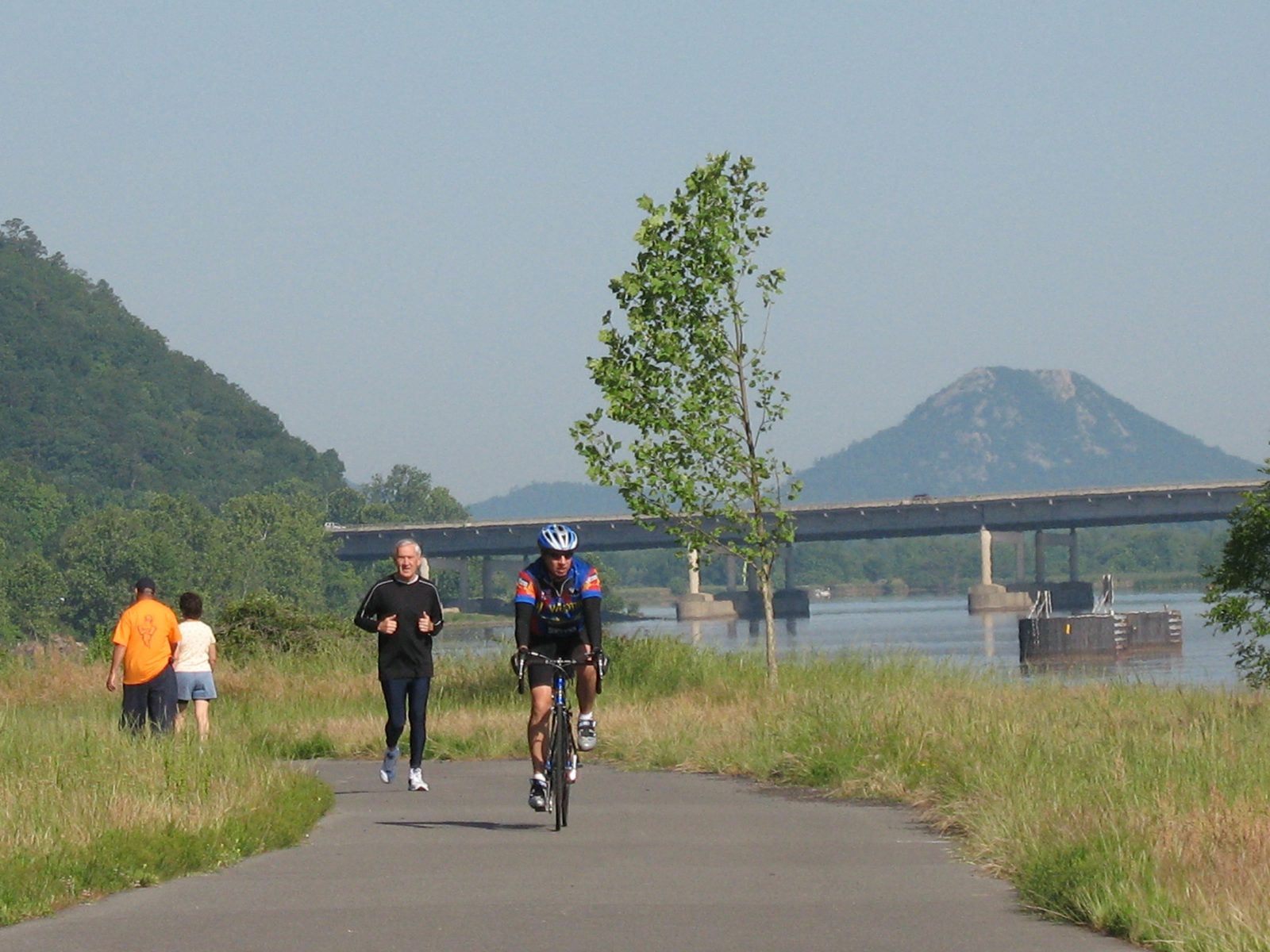
What is Arkansas River Trail?
The Arkansas River Trail is a river route for recreation that can also be used for transportation. Pick a route that fits the planned outing, rather than treating every bridge connection and loop as the same journey.
The main loop is anchored by Big Dam Bridge and Clinton Bridge on opposite riverbanks. A smaller Broadway Bridge and Clinton Bridge connection runs within the downtown areas of Little Rock and North Little Rock. A guest can consider a shorter outing without being committed to the larger route.
What should visitors understand about its setting?
Two Rivers Bridge provides the gateway to the on-street ART Grand Loop. Distinguish an on-street outing from a shorter river loop when helping guests think about equipment and their preferred kind of ride. Leave route choice and personal suitability with the visitor, and avoid describing every option as traffic-free.
A trail-focused stay benefits from a practical entrance area for shoes, bags, and any equipment the home permits. Be explicit about storage instead of letting a guest assume a shared hallway or private room is available. Plan the return as carefully as departure, including how to handle wet items without damaging floors or furniture.
Which dates and details help explain the visit?
- Main river loop: 15.6 miles.
- Broadway–Clinton downtown loop: 2.5 miles.
- On-street ART Grand Loop: 88 miles.
- Clinton Presidential Park Bridge railway construction: 1899; recommissioned for bicyclists and pedestrians in 2011.
- Two Rivers Bridge completed: 2011.
What should guests arrange before visiting?
Big Dam Bridge was built for bicyclists and pedestrians. Its bridge outing may interest guests who do not want to commit to a larger trail plan. Ask the visitor where the outing will begin and end, then keep rental arrival directions separate from the route they choose on the river.
Confirm the visit before building the day around it. Ask the venue about the entrance to use, the parking or drop-off arrangement, and any reservation or equipment requirements for the intended activity. Keep the guest's own needs at the center of that conversation, without assuming that another visitor's experience will apply.
Where can guests connect the visit with a stay?
Consider the actual home in River Market District when planning the visit, then check the route from that address. A place name is not a checked travel time. Explain the home's entrance and parking first, and keep destination directions distinct from the final approach to the rental.
Other area options include Big Dam Bridge and Clinton Presidential Center. Let the guest choose according to interests and the time available rather than presenting a fixed combined itinerary. The places directory can help a visitor distinguish the setting of the home from destinations elsewhere in the area.
What should the home provide for an outdoor stay?
Plan the return from the outing as well as the departure. Give wet shoes and outdoor bags an agreed place. Tell guests which areas they can use for equipment and which spaces remain private, so a shared entrance or living room does not become storage by assumption.
Describe laundry and towel arrangements clearly if they are offered. Ask about larger equipment before accepting it, especially where it may affect parking, doors, or floor surfaces. A useful entry setup can support an outdoor visit without promising a special storage facility. Photograph and explain the actual arrangement so the guest can decide whether it suits the trip.
How can owners keep check-in independent of an outing?
Agree on the rental's arrival arrangement before the guest leaves for an outdoor activity. A change in weather does not confirm early access. If the guest wants to arrive sooner, check that cleaning and any repair work can be completed before making a new promise.
Keep entry instructions usable without a conversation at the door, and explain where a car belongs. After departure, have the cleaner report wet items, equipment marks, missing supplies, and any maintenance issue before the next arrival. An owner who cannot attend should assign someone to coordinate a response, with a clear way to record what was found and what remains to be done.
What mistakes should outdoor-focused hosts avoid?
Avoid describing regional recreation as an amenity of the home unless the rental actually provides it. The outing and the accommodation are separate arrangements. Guests should understand what equipment, storage, parking, and household supplies are included before relying on them.
- Promising a walking route without checking it can leave guests with unsuitable directions.
- Accepting bulky equipment without checking the entrance or parking can create an arrival problem.
- Calling a home waterfront from a regional lake reference misrepresents its setting.
- Leaving wet-gear care unexplained can damage household surfaces.
Offer a comfortable place to rest after the outing and a simple way to report a problem. Be clear about outdoor areas guests may use and consideration for neighbors. The owner can support a recreation-focused visit without promising conditions at a public destination.
How can an owner settle a practical guest request?
If guests choose different trail plans, ask how that affects arrival and their use of the home. They may need a shared understanding of keys, equipment storage, and where wet items belong. Settle those household details directly, while leaving route choice and personal suitability with the people making the outing rather than promising a common trail experience.
Record the agreement and share it with the person doing the work. If arrival, cleaning, or equipment arrangements change, update everyone affected before the guest relies on the change. A clear household decision is more useful than a flexible-sounding promise whose practical details remain unresolved.
What does the visit mean for rental owners?
For a Little Rock rental, the permit application requires parking and scaled floor plans, and annual inspection and business license payments are required before operation. Keep the approved property arrangement and guest instructions consistent. Use the River Market District owner information alongside the Little Rock permit requirements when preparing the home.
Use the cost planning questions to assign cleaning, maintenance, and guest support. An attraction can help explain why a guest might consider the area, but it does not settle the work needed to run a rental or establish a forecast of bookings.
Questions
What should guests check before a visit to Arkansas River Trail?
Check the intended activity, access arrangements, and any reservation with the venue before making a schedule. Ask about the needs of the actual visiting party rather than assuming every visitor uses the same route or entrance.
Does a nearby landmark change rental permission?
Rental permission depends on the home's municipality, address, and proposed use. Ask the responsible office about the rental arrangement separately from plans to visit an attraction.
What should a host explain about the home?
Explain entry, parking, sleeping spaces, household supplies, and how to report a problem. Describe actual access features so guests can assess the accommodation separately from the venue.